 |
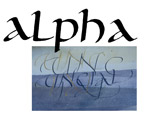
Uncial This script is recommended for beginning calligraphy. The basic alphabet offered here is a simple capitalletterfoJDl, dosely based a historical example, and is useful and attractive in text use, and enables the beginner to make a confident start. Lessons 1 & 2 are suitable for complete beginneI'S, who can then complete a further 2 lessons, writing out texts to consolidate the script, or progress to another script.. The 4-lesson morse set-out as follows is suitable for those wishing to improve the uncial script and to explore variations. Lesson 1: Pencil letterforms, letter spacing,. pen written alphabet, letter spacing, writing out a text. Lesson 2: Pen-written texts at smaller nib sizes, introduction to uncial variations. Lesson 3: Further exploring uncial variations, and use in texts. Lesson 4: Design exercises with uncial andmore experimental variations.. |
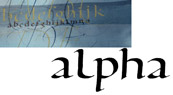 |
Foundational Hand This is a useful script for any calligrapher as a learning discipline aiding in the perception of subtle relationships ofletterform. Based on the 10th century Ramsey Psalter, and popularised by the well-known English calligrapher Edward Johnston early last century, it is particularly useful for formal work. It also provides a sound basis for personal experiment with variations of letter weight, movement etc. at a later stage. Lesson 1: Pencil letters in fo:rmation groups, alphabetical order, letter spacing, word practice. Lesson 2: Pen-written letters in formation groups, alphabetical order, letter spacing, word practice. Lesson 3: Pen-written text in large nib size. Lesson 4: Pen-written text in small nib size. |
 |
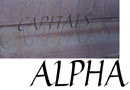
Roman Capitals: These letters are needed to accompany Foundational Hand, but also have many applications in their own right. They are particularly useful for an understanding of the concept of letter-spacing, of related letter proportions, and the use of different pen angles within the same alphabet. An inexhaustible range of capital variations, both formal and experimental, can be developed from a sound basis of pen-written Roman Capitals. Lesson 1: Pencil letters in formation groups, alphabetical order, letter spacing, word practice Lesson 2: Pen-written letters in fonnation groups, alphabetical order, letter spacing word practice. Lesson 3: Pen-written text in a large nib size. Lesson 4: Pen-written text in smaller nib sizes. |
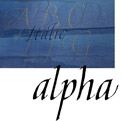 |
Italic Stemming from the Italian Renaissance, italic is an invaluable part of the calligrapher's repertoire - particularly encouraging rhythm in writing, and in its variations offers wide scope for experiment. In its many guises, italic is useful in a very wide range of design situations. This course focuses on a basic, formal italic, further courses cover italic variations. Lesson 1: Pencil letters in formation groups, alphabetical order, letter spacing, word practice. Lesson 2: Pen-written letters in formation groups, alphabetical order, letter spacing word practice. Lesson 3: Pen-written texts in a large nib size. Lesson 4: Pen-written texts in smaller nib sizes. |
 |
Italic Capitals Lesson 1: Pencil letter in formation groups,
alphabetical order, letter spacing, word practice. |
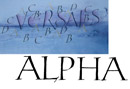 |
Versals |
 |
The following 4 courses are suitable for calligraphers
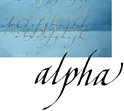
beyond the beginning Joined cursive italic variations |
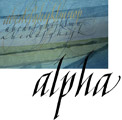 |
Sharpened italic and variations Sharpened italic, like basic italic, is useful for encouraging writing rhythm, in addition to basic sharpened italic, this course introduces a range of variations.. Lesson 1: Basic sharpened italic - pen-written letters in formation groups, letter spacing, alphabetical order, word practice. Lesson 2: Writing out texts at different nib sizes. Lesson 3: Exploring unjoined sharpened italic variations. Lesson 4: Exploring joined sharpened italic variations. |
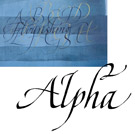 |
Flourish design Flourishes can greatly enhance italic in suitable design situations. This course covers flourishes for italic and italic capitals"-atttlA sound basic knowledge and practice of these scripts is desirable before learning flourishes. Lesson 1: Range of flourishes for italic minuscule letters Lesson 2: Writing texts with flourished italic at different nib sizes, and practising more complex flourishes. Lesson 3: Flourished italic capital alphabet and word practice. Lesson 4: More complex flourished capitals, and using flourished italic and capitals in texts. |